By Route 40 Auto Editorial Team · Updated 2026-09-06
Wheeling, West Virginia drivers facing a check engine light find accurate diagnostics at Route 40 Auto, a veteran-owned shop based in Bridgeport, Ohio. Route 40 Auto has over 60 years of automotive repair experience. Technicians identify the true cause, whether a sensor fault or an emissions issue, before costs escalate. Honest explanations precede every repair, with no invoice surprises.
Key Takeaways
- Route 40 Auto diagnoses check engine lights using advanced computer diagnostic tools to identify engine issues.
- Your vehicle’s onboard computer system detects internal problems and triggers the dashboard warning light immediately.
- Professional diagnostics pinpoint check engine light causes before they develop into expensive engine repairs.
- Route 40 Auto’s 5-person team serves Bridgeport, OH and surrounding areas with check engine light services.
What does a check engine light mean?
A Check Engine Light signals that the vehicle’s computer has detected a problem specifically with the engine. This dashboard warning serves as the car’s primary communication method for internal issues, according to European Auto Check Engine Light Diagnostics, Services. The light activates when the onboard system identifies a fault that requires attention.
Ignoring this warning creates measurable consequences. Route 40 Auto reports that neglecting the light leads to reduced performance, poor fuel economy, and costly repairs. What begins as a minor issue often escalates into a major breakdown when left unaddressed.
Is a check engine light always a serious problem?
The CEL spans a wide range of severity. A driver in Wheeling, West Virginia might see the light for something as simple as a loose gas cap or a faulty oxygen sensor. Other triggers include serious engine misfires or complete emissions system failures. The light itself does not indicate the severity—only that a problem exists.
What happens during an Engine Diagnostic?
A professional Diagnostic scan reads the vehicle’s computer codes to identify the root cause. This process pinpoints whether the issue involves:
- Engine misfires
- Faulty sensors
- Emissions system components
The scan provides the data needed to determine the proper repair path. Without this step, guessing at the problem wastes time and money.
When should a driver act on the warning?
The service engine now message demands immediate attention, as does a flashing check engine light. A steady light allows slightly more time, but delays still compound the damage. Route 40 Auto emphasizes understanding the issue before it turns into a major breakdown. Drivers in the Ohio Valley who address the warning promptly protect both their vehicle’s performance and their wallet.
Why is a diagnostic scan essential?
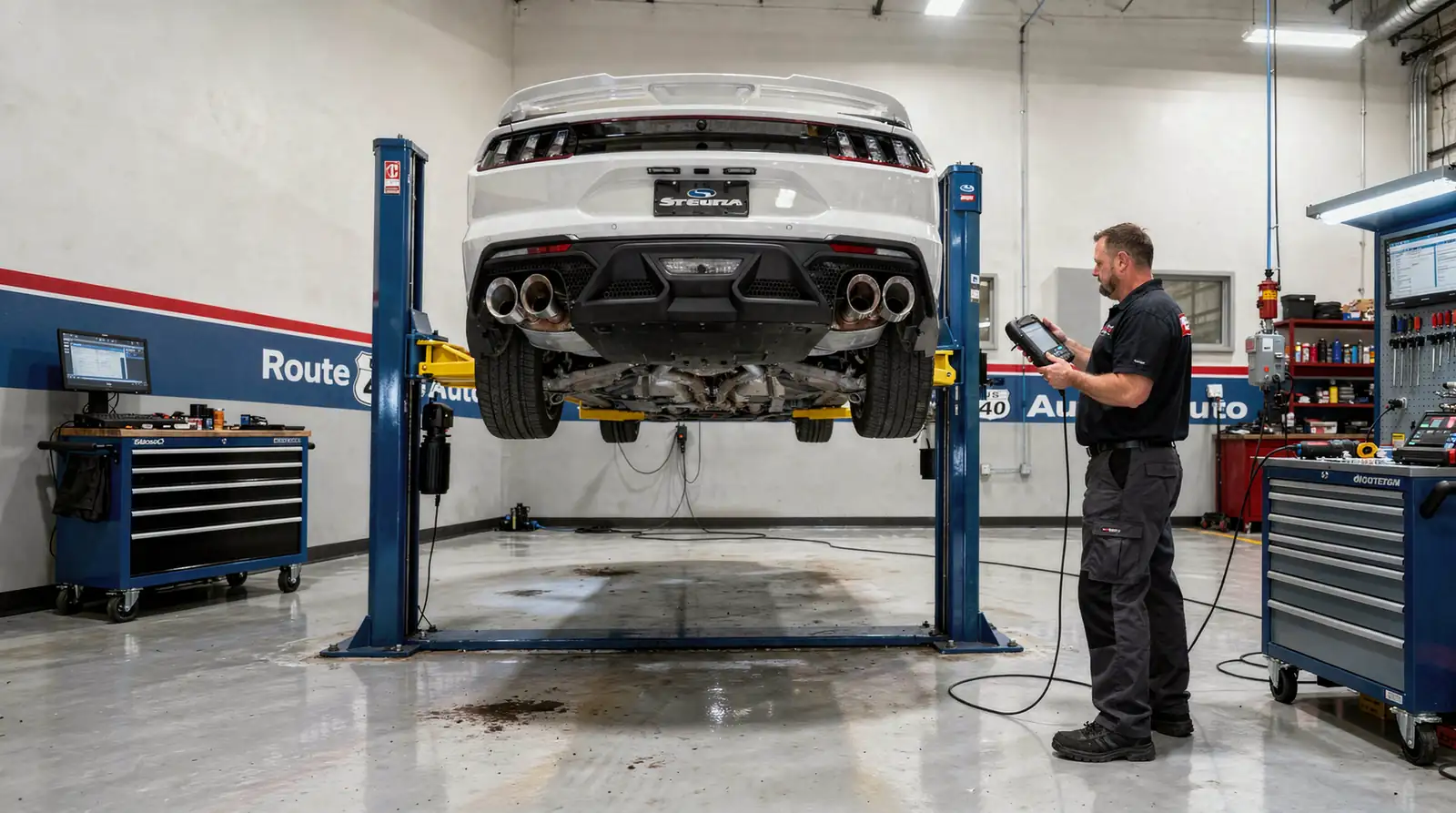
A Diagnostic scan is the only reliable method to determine why a Check Engine Light (often abbreviated as CEL) has illuminated on a Wheeling, West Virginia driver’s dashboard. Modern vehicles contain onboard computers that monitor hundreds of systems; when a fault occurs, the computer stores a trouble code. A professional diagnostic scan retrieves that code and translates it into a specific, actionable repair path. ### What does a diagnostic scan reveal?
A diagnostic scan identifies the exact cause of the CEL, distinguishing between minor issues and serious mechanical failures. The vehicle’s computer logs data from sensors throughout the engine, emissions, and drivetrain systems. A technician reads this data to determine whether the problem is a loose gas cap, a failing oxygen sensor, or a more complex engine misfire. This precision eliminates the need for trial-and-error part replacement.
How does a diagnostic scan prevent costly repairs?
Professional diagnostics catch problems early, before they escalate into expensive breakdowns. When a Wheeling driver ignores the service engine now light, a small issue can cascade into major engine damage. A diagnostic scan provides the information needed to address the root cause immediately, preserving fuel economy and preventing further component failure. The scan also verifies that repairs resolved the issue, giving the driver confidence the vehicle is safe.
The diagnostic process in practice
- Code retrieval: The technician connects a scanner to the vehicle’s OBD-II port and reads the stored trouble codes.
- Data analysis: The technician interprets live sensor data alongside the codes to confirm the diagnosis.
- Repair plan: The shop presents a clear explanation of the problem, the required repair, and the associated cost before any work begins.
A diagnostic scan transforms an ambiguous dashboard warning into a concrete, manageable repair. For Wheeling drivers, this process ensures the vehicle receives exactly the service it needs — nothing more, nothing less.
What causes a check engine light?
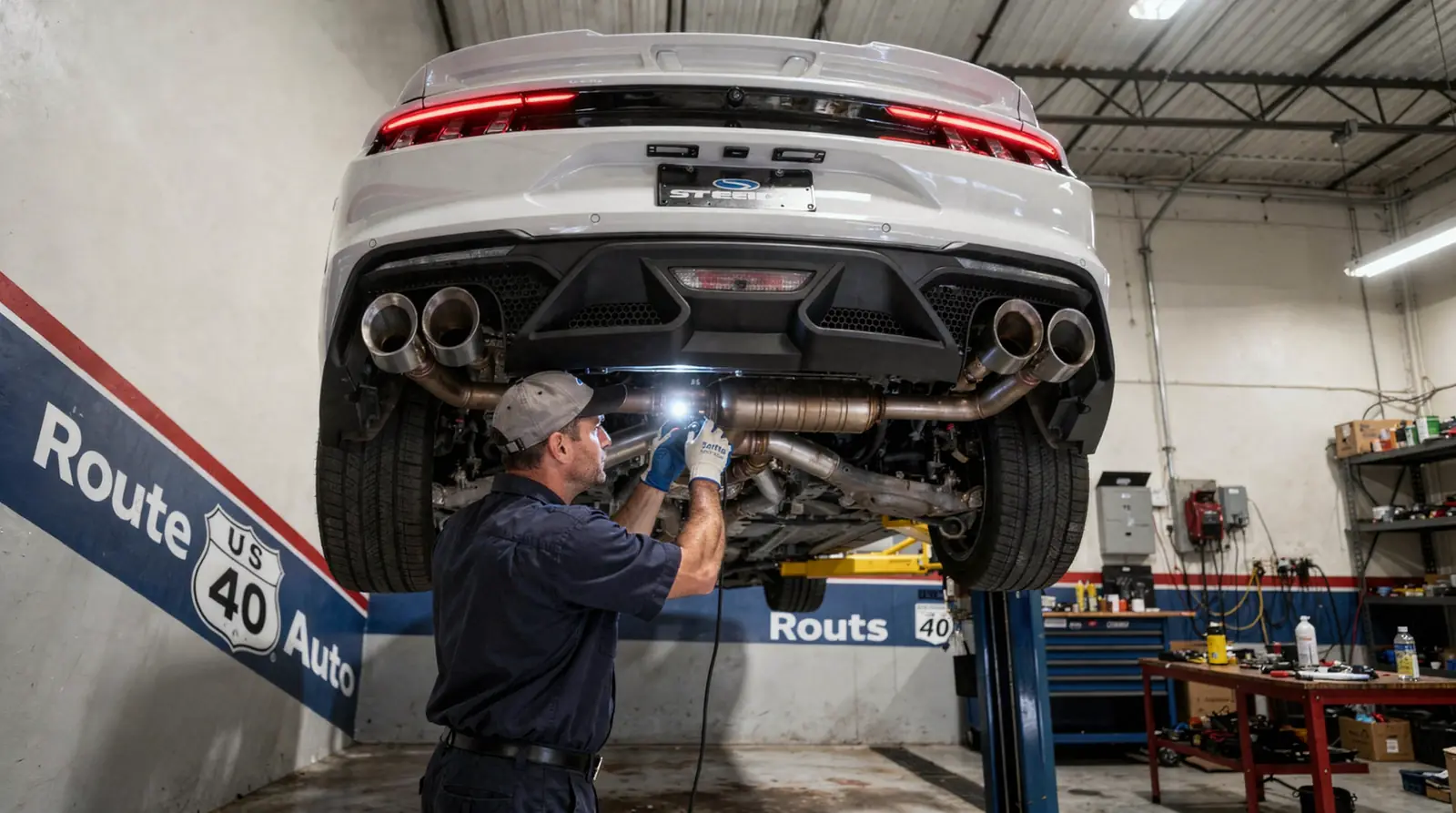
A Check Engine Light (CEL) illuminates when the vehicle’s onboard computer detects a malfunction within the engine, emissions, fuel, or ignition systems. The causes range from minor sensor faults to serious mechanical failures requiring immediate attention. Ignoring this warning allows small problems to escalate into expensive repairs.
Common triggers for a check engine light
The most frequent causes fall into several categories. A failing oxygen sensor ranks among the top triggers for a CEL. This component monitors exhaust gases to regulate the air-fuel mixture. Engine misfires also commonly activate the light, often resulting from worn spark plugs, faulty ignition coils, or fuel delivery issues. Faulty sensors — including the mass air flow (MAF) sensor and oxygen (O2) sensor — send incorrect data to the computer, prompting the warning. Emissions system problems, such as a loose gas cap or a failing evaporative emissions (EVAP) system, represent another frequent source.
What serious issues can a check engine light indicate?
While some triggers are minor, others signal significant mechanical problems. A Diagnostic scan performed by a qualified technician can differentiate between a simple sensor replacement and a major repair. Serious complications that may cause a CEL include:
- Catalytic converter failure — a costly component that reduces exhaust emissions
- Mass air flow (MAF) sensor failure — disrupts the engine’s air-fuel ratio
- Oxygen (O2) sensor failure — degrades fuel economy and emissions control
- Ignition coil issues — leads to engine misfires and reduced performance
How does a flashing check engine light differ from a steady one?
A steady service engine now light indicates a problem that requires attention but is not immediately critical. A flashing CEL signals a severe issue — typically a major engine misfire that can damage the catalytic converter. Drivers in Wheeling, West Virginia should treat a flashing light as an urgent warning and seek professional Engine Diagnostic services promptly to prevent further damage.
When should you service engine now?
A flashing Check Engine Light demands immediate attention. This signal indicates a serious problem that requires prompt diagnosis before further driving. A steady light, by contrast, allows for planned scheduling, but ignoring it carries real consequences.
Delaying diagnostic tests and necessary engine repairs causes vehicle problems and repair costs to add up quickly. What begins as a minor sensor issue can escalate into a major engine or emissions failure. Wheeling, West Virginia drivers who postpone service often face larger invoices than those who act promptly.
What does a flashing CEL mean?
A flashing CEL signals a severe condition, typically involving ignition, fuel, or emission systems. This differs from a steady light, which may indicate a loose gas cap or a faulty sensor. The distinction matters for safety and cost. A flashing light warrants pulling over and arranging immediate transport to a repair facility.
How does a steady light differ?
A steady Check Engine Light should not be ignored either. This light is the vehicle’s way of communicating that something is wrong internally. The warning serves as an early detection mechanism, allowing owners to address issues before they worsen.
A professional Diagnostic scan identifies the underlying fault code and reveals the specific system involved. Route 40 Auto provides accurate diagnostics to find the real issue. Fix it before it becomes a more expensive repair. The phrase service engine now appears on many dashboards as the same warning; drivers should treat it with equal seriousness.
For Wheeling residents, the practical rule is simple: flashing means stop, steady means schedule. Either way, professional diagnosis protects both the vehicle and the owner’s budget.
How does a CEL diagnostic work?
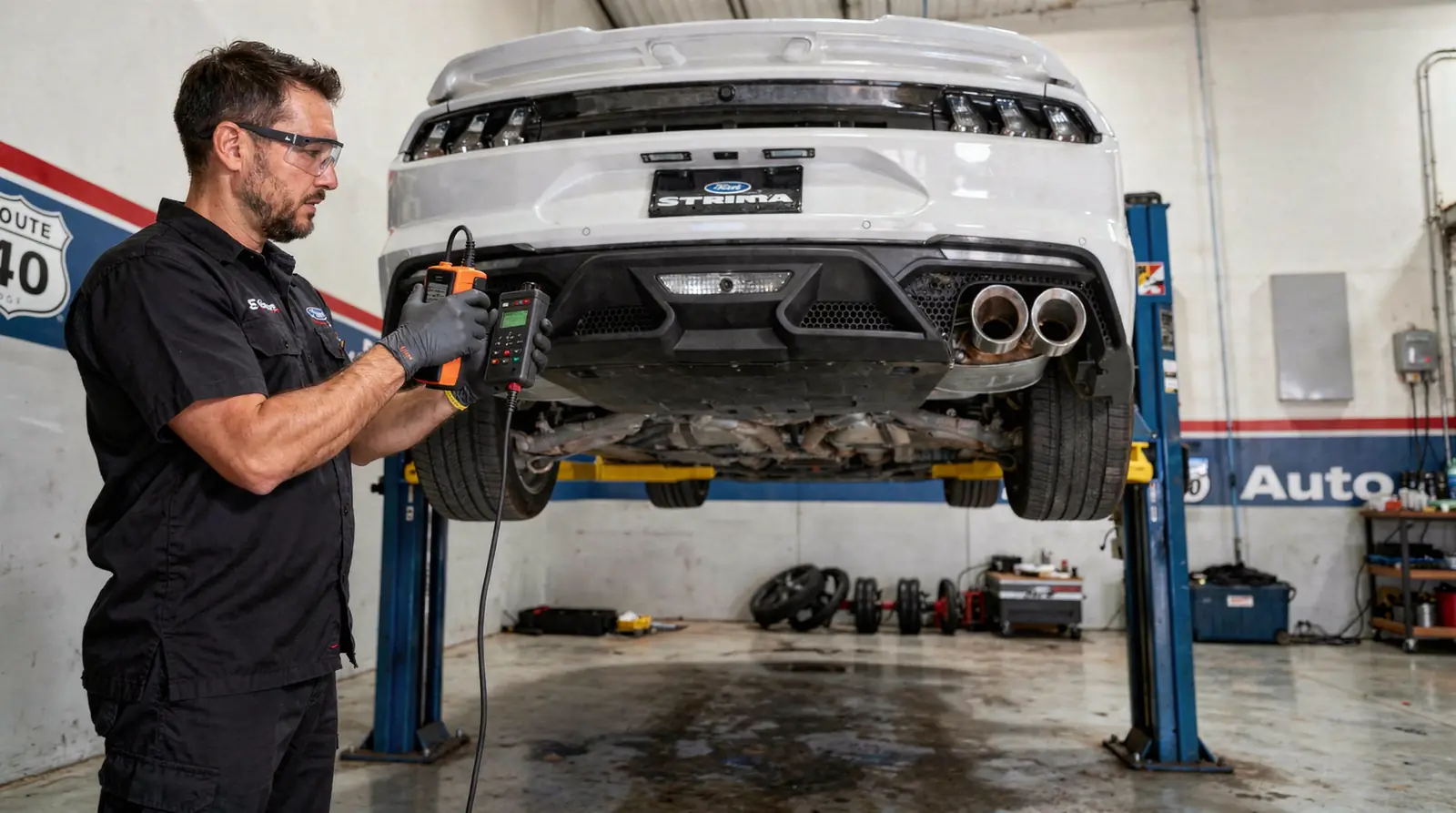
A CEL diagnostic begins when a technician connects a Diagnostic scan tool to the vehicle’s onboard computer. This tool retrieves stored trouble codes that identify the specific system or component triggering the warning. Modern diagnostic equipment assesses the vehicle’s health by reading real-time sensor data alongside those codes. The process pinpoints the root cause rather than guessing at symptoms.
What happens during the diagnostic process?
Technicians use cutting-edge diagnostic tools to evaluate the vehicle, whether the driver reports drivability issues or a persistent Check Engine Light. The scan reads the computer’s memory for fault codes related to the engine, emissions, or transmission systems. Each code points to a specific area — an oxygen sensor, a misfiring cylinder, or a vacuum leak, for example. The technician then performs targeted tests to confirm the exact component at fault.
Why does an accurate diagnosis matter?
An accurate Engine Diagnostic prevents unnecessary repairs. Replacing parts without confirming the cause wastes time and money. The diagnostic process identifies the exact issue so customers do not spend on components they do not need. Once the repair is complete, the technician resets and removes the service engine now code from the computer. A follow-up test drive confirms the system is functioning correctly and the warning light stays off.
Drivers in Wheeling, West Virginia benefit from this methodical approach. A thorough diagnostic scan eliminates guesswork and delivers a clear repair plan before any work begins.
What are common check engine light symptoms?
A Check Engine Light that stays illuminated continuously or begins flashing signals distinct levels of urgency. A steady light indicates a non-emergency issue requiring prompt attention, while a flashing light demands immediate professional evaluation. Drivers in Wheeling, West Virginia who observe either condition should schedule an Engine Diagnostic without delay.
What does a flashing check engine light mean?
A flashing CEL (Check Engine Light) typically indicates a serious problem within the vehicle’s ignition, fuel, or emission systems. This warning suggests an active malfunction that can cause progressive damage if ignored. The flashing pattern communicates urgency that a steady light does not.
What abnormal sounds accompany a check engine light?
When the service engine now indicator activates alongside unusual vehicle noises, the combination points to a mechanical issue requiring diagnosis. Common accompanying sounds include knocking, rattling, or rough idling. These auditory cues help technicians narrow the problem during a Diagnostic scan.
Key symptoms requiring immediate action:
- Service light stays on continuously – Indicates a persistent fault that needs evaluation
- Service light flashes – Signals a serious ignition, fuel, or emission system problem
- Abnormal vehicle sounds – Knocking, ticking, or grinding noises when the light is active
Delaying a diagnostic scan after noticing these symptoms allows minor issues to escalate into major repairs. A flashing light combined with unusual sounds creates the highest urgency for professional inspection. Wheeling drivers who respond quickly to these warning signs protect both vehicle performance and repair costs.
Where to get engine diagnostics near Wheeling?
Drivers in Wheeling, West Virginia can obtain engine diagnostics from Route 40 Auto, a veteran-owned full-service repair shop located at 422 Main Street in Bridgeport, Ohio. The shop brings over 60 years of combined mechanical experience to Engine Diagnostic work for all makes and models. Route 40 Auto serves the Ohio Valley region, including Wheeling, providing accurate diagnostics for Check Engine Light issues and other drivability concerns.
What does the diagnostic process involve?
Modern vehicles rely on onboard computers to monitor performance. When the service engine now light or CEL (Check Engine Light) illuminates, the computer stores a trouble code. Route 40 Auto’s technicians perform a Diagnostic scan using professional-grade tools to read those codes and interpret what they mean. The scan identifies the root cause, whether a faulty oxygen sensor, a loose gas cap, or a more serious emissions system failure.
The customer receives a clear explanation of the problem, why it matters, and the estimated cost before any repair work begins. No pressure and no unnecessary repairs characterize the process.
How long does a diagnostic scan take?
A standard diagnostic scan typically takes 30 to 60 minutes, depending on the complexity of the issue. The technician connects a scanner to the vehicle’s OBD-II port, retrieves the codes, and performs additional checks to confirm the diagnosis. For intermittent problems or codes that require road testing, the process may extend slightly longer. Route 40 Auto schedules appointments to minimize wait times.
How to choose a reliable diagnostic shop?
Selecting a diagnostic shop in Wheeling, West Virginia requires evaluating transparency, technical capability, and ethical business practices. A reliable shop provides honest communication. Fair pricing, walking customers through what is wrong and why it matters before work begins. This approach eliminates the guesswork that often accompanies a Check Engine Light or CEL illumination.
What distinguishes a trustworthy diagnostic provider?
A dependable Engine Diagnostic process begins with clear communication. Customers should receive a thorough explanation of the issue, its potential consequences, and the exact cost before any repair work starts. Shops that demonstrate this practice build long-term trust by treating the diagnostic phase as an educational step rather than a sales opportunity.
What technical standards should customers expect?
Experienced technicians using modern diagnostic tools deliver accurate results for any [service engine now](https://route40auto.com) warning. A Diagnostic scan performed with up-to-date equipment identifies the root cause efficiently, preventing unnecessary component replacements. Shops with combined decades of mechanical experience bring pattern recognition that speeds accurate diagnosis.
- Transparent pricing: No surprise charges on the final invoice
- No pressure tactics: Customers never face coercion to approve unnecessary repairs
- Clear explanations: Technicians explain what is wrong and why it matters
A trustworthy shop prioritizes safety and accuracy over profit, ensuring every CEL diagnosis leads to the correct repair the first time.
FAQ
What does a check engine light indicate?
The light signals that the vehicle’s computer detected a problem with the engine. It serves as the car’s primary way of communicating internal issues requiring attention.
Where can Wheeling, WV drivers get check engine light diagnostics?
Route 40 Auto, a veteran-owned shop in Bridgeport, Ohio, diagnoses check engine lights for Wheeling drivers. Their 5-person team uses advanced computer diagnostic tools to identify the true cause.
What happens if the check engine light gets ignored?
Ignoring the warning leads to reduced performance, poor fuel economy, and costly repairs. A minor issue often escalates into a major breakdown when left unaddressed.
Conclusion
In closing, check engine light diagnostics demand the precision and expertise that distinguish professional automotive service from guesswork. Route 40 Auto approaches every diagnostic with the systematic methodology. Technical knowledge required to identify root causes accurately, ensuring your vehicle receives the appropriate repairs rather than unnecessary work. When warning lights illuminate, trust the diagnostic process that prioritizes your safety and your vehicle’s long-term performance.