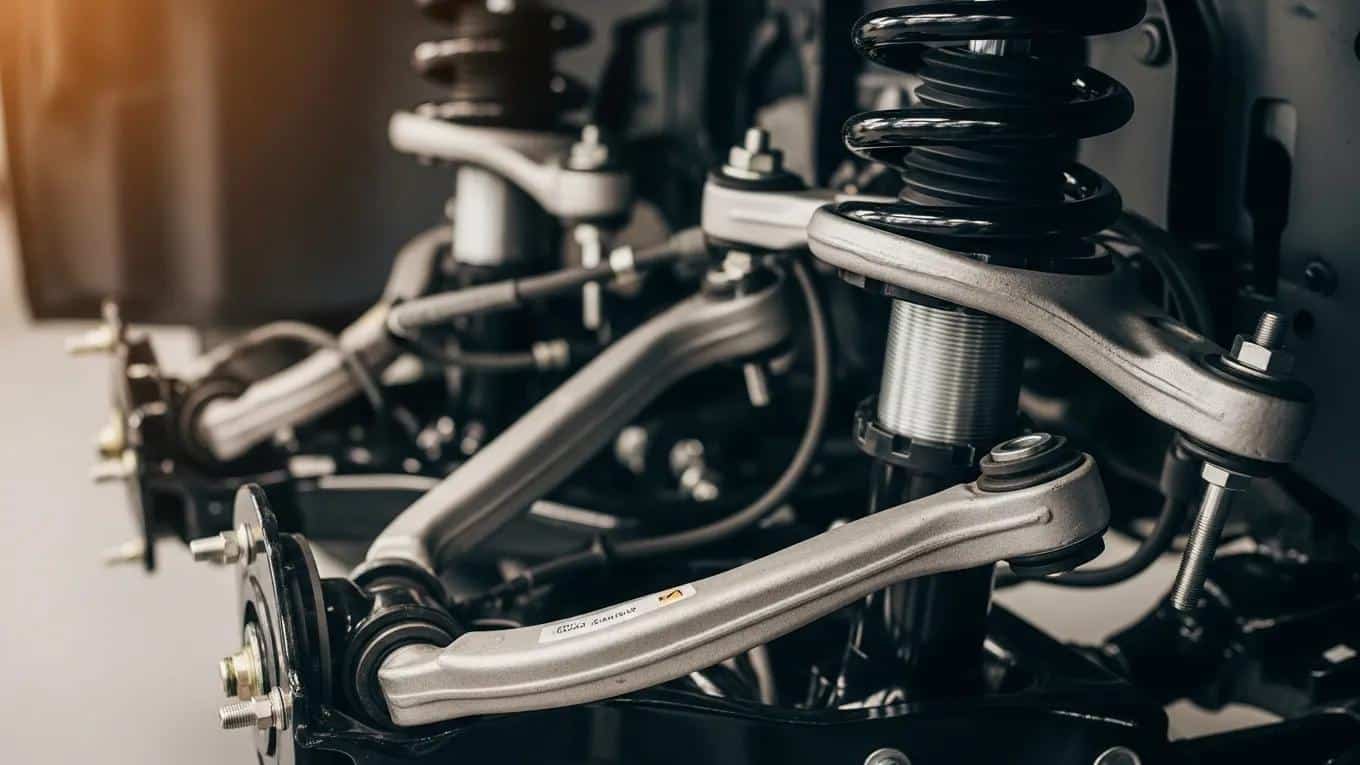
Maintaining a safe and reliable vehicle is crucial for drivers in Bridgeport, OH, and understanding the role of suspension components is a key part of that maintenance. This guide will delve into the importance of shocks, struts, and control arms, explaining how they contribute to vehicle safety and performance. Drivers often overlook these components, yet they play a vital role in ensuring a smooth ride and effective handling. By the end of this article, you will learn about the functions of these components, maintenance tips, and how to recognize signs that your suspension may need repair. We will also discuss the importance of seeking professional help for suspension issues, particularly from trusted local services.
Indeed, the entire suspension system is fundamental to both driving comfort and vehicle control, as highlighted by research into its critical functions and common issues.
Vehicle Suspension: Comfort, Control & Common Problems
The design of the suspension system, which transmits force between the vehicle and the ground, is principally responsible for the driving comfort of a vehicle. Importantly, a vehicle’s suspension system contributes to the reliability and precision of steering and control, as well as to the friction between the vehicle and the road. The suspension system is also responsible for absorbing and dampening road stress, so that we do not feel every bump on the road when driving. This paper introduced the most common suspension problems and the symptoms that may indicate you need a suspension system repair, such as faulty shocks or struts, damaged springs, and faulty control arms.
An overview of the most common vehicle suspension problems, 2022
Suspension systems are essential for vehicle safety, providing stability and comfort while driving. They absorb shocks from the road, ensuring that the vehicle maintains contact with the ground, which is crucial for effective steering and braking. In Bridgeport, where road conditions can vary, a well-functioning suspension system is even more critical. Drivers should be aware of the common issues that can arise with suspension components, as neglecting these can lead to serious safety hazards.
Understanding the specific roles of shocks, struts, and control arms is vital for maintaining vehicle safety. Each component serves a unique function that contributes to the overall performance of the suspension system.
Shocks, or shock absorbers, are designed to control the impact and rebound of the vehicle’s springs. They absorb road impacts, maintaining vehicle control and comfort. Worn shocks can lead to excessive bouncing and poor handling, making it difficult to control the vehicle, especially during turns or sudden stops.
Further emphasizing this point, studies confirm that the condition of your shock absorbers directly correlates with your vehicle’s stability and overall safety on the road.
Worn Shocks Impact Vehicle Stability & Safety
effects worn dampers have on vehicle stability and safety through dynamic model simulation. Dampers, an integral component of a vehicle’s suspension system, work in conjunction with other parts like upper control arms and lower control arms.
The impact of worn shocks on vehicle handling and stability, G Rizzoni, 2006
Struts serve a dual purpose in the suspension system. They not only absorb shocks but also provide structural support to the vehicle. Struts help maintain the vehicle’s alignment and stability, which is crucial for safe handling. If struts are worn, they can cause the vehicle to feel unstable, leading to a bumpy ride and increased wear on tires.
Control arms connect the suspension to the vehicle’s chassis, allowing for controlled movement of the wheels. They play a significant role in maintaining proper wheel alignment and handling. Damaged control arms can lead to misalignment, causing uneven tire wear and poor handling characteristics. Recognizing signs of control arm issues, such as clunking noises or a pulling sensation while driving, is essential for timely repairs.
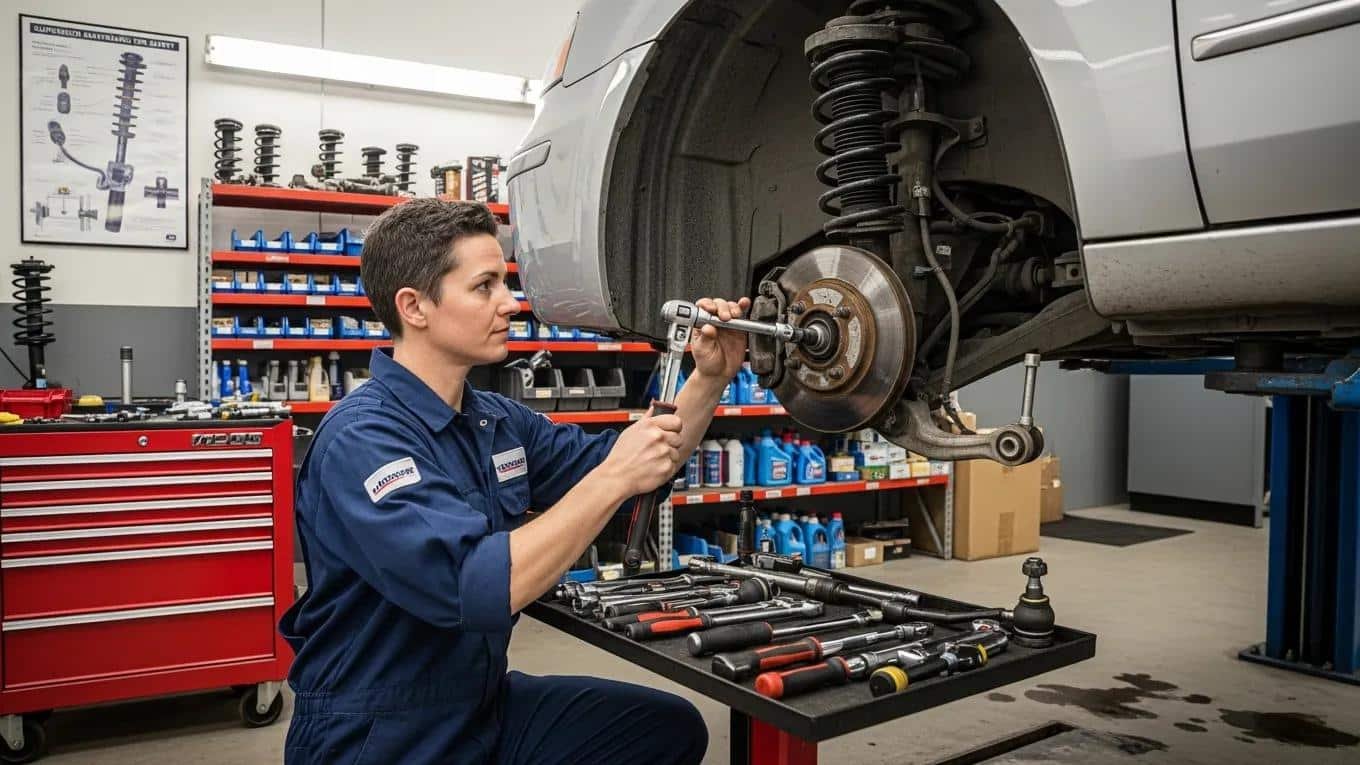
Regular maintenance of suspension components is crucial for ensuring vehicle safety and performance. Here are some best practices for maintaining your suspension system:
After ensuring your suspension is in good condition, it’s important to book an appointment for service if any issues arise.
Neglecting suspension maintenance can lead to serious safety implications. A well-maintained suspension system enhances handling and stability, providing a smoother and safer driving experience. Early repairs can also be more cost-effective, preventing more extensive damage and higher repair costs down the line.
Shocks, struts, and control arms are critical components of a vehicle’s suspension system. Shocks absorb impacts from the road, struts provide structural support and stability, and control arms connect the suspension to the chassis. Understanding these components helps drivers appreciate their importance in maintaining vehicle safety and performance.
Shocks improve vehicle stability by controlling the movement of the suspension system. They dampen the oscillations caused by road irregularities, ensuring that the tires maintain contact with the road surface. This contact is essential for effective steering and braking, making shocks a vital component of vehicle safety.
The critical role of shock absorbers extends even to braking performance, making their proper diagnosis and maintenance paramount for vehicle safety.
Shock Absorber Diagnostics & Braking Safety
The practical problems that usually come up during the on-vehicle testing of motor car shock absorbers have been discussed. It has also been shown that the wear of shock absorbers may affect the value of braking deceleration of cars with ABS (anti-lock braking system) when moving on uneven ground. The main objective of the work was to assess usefulness and reliability of various diagnostic methods intended for the on-vehicle testing of car shock absorbers.
Diagnostics of the on-vehicle shock absorber testing, M Guzek, 2021
Struts serve multiple functions in a vehicle’s suspension system. They absorb shocks and provide structural support, helping to maintain the vehicle’s alignment and stability. By doing so, struts enhance the overall handling of the vehicle, making them essential for safe driving.
Recognizing the signs that your suspension needs repair is crucial for maintaining vehicle safety. Common symptoms include:
If you notice any of these symptoms, it’s important to seek professional help.
Bad shocks and struts can lead to several noticeable symptoms, including:
Control arm issues can significantly impact vehicle handling. If control arms are damaged, they can cause the vehicle to pull to one side, leading to uneven tire wear and a bumpy ride. Addressing control arm problems promptly is essential for maintaining safe driving conditions.
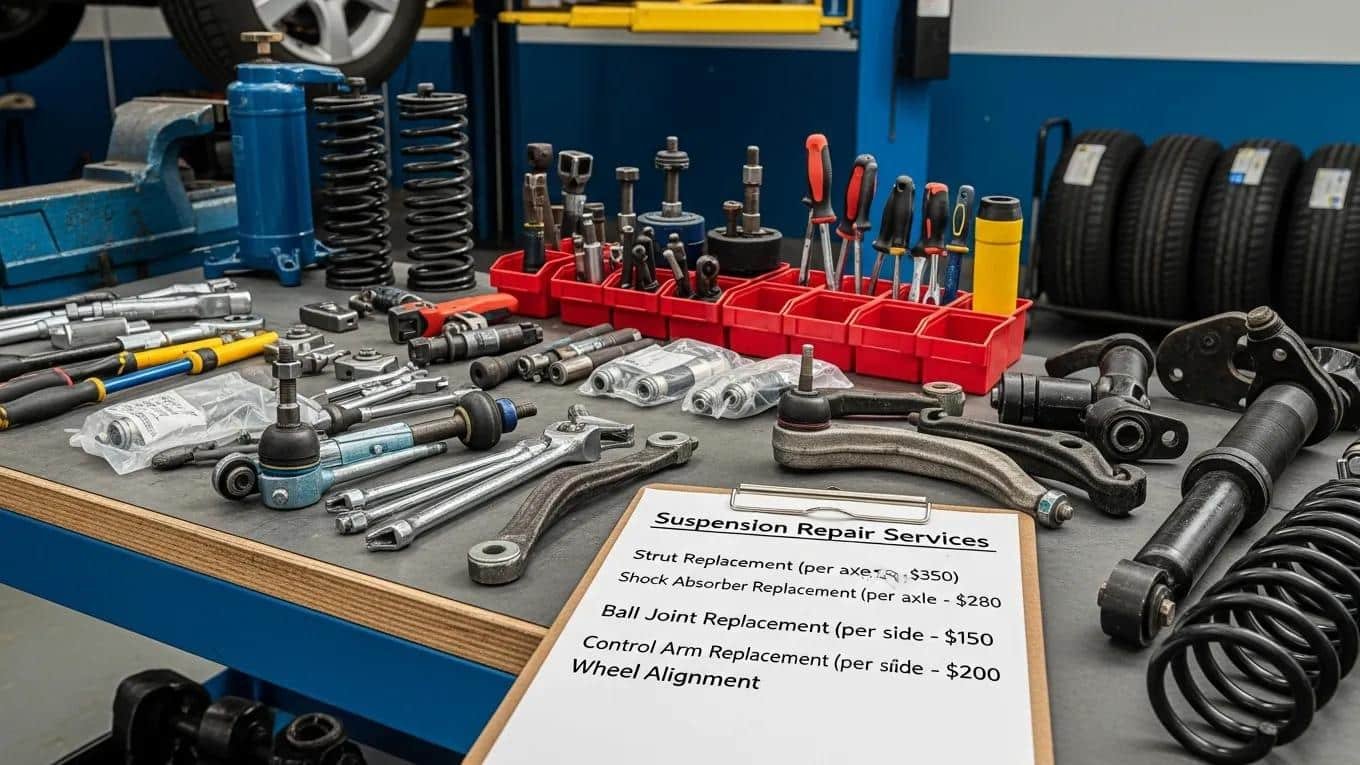
The costs for suspension repair can vary based on the specific services needed. Here are some average pricing estimates for common suspension repairs in Bridgeport, OH:
Understanding these costs can help you budget for necessary repairs.
Booking reliable suspension repair services is essential for ensuring your vehicle’s safety. To schedule an appointment, contact local service providers and provide details about your vehicle’s symptoms. It’s important to choose a service that specializes in suspension repairs to ensure quality work.
Route 40 Auto is a trusted provider for suspension repairs in Bridgeport, OH. Our team of experienced technicians offers comprehensive services, ensuring that your vehicle’s suspension system is in top condition. We prioritize customer satisfaction and provide reliable, high-quality repairs.
Booking a suspension repair at Route 40 Auto is straightforward. You can contact us via phone or email to discuss your vehicle’s issues. Be prepared to provide details about the symptoms you’ve noticed, as this will help our technicians diagnose the problem more effectively. Our goal is to make the process as smooth as possible for our customers.