Diagnosing exhaust system problems is crucial for maintaining vehicle performance and safety. The exhaust system plays a vital role in directing harmful gases away from the engine and reducing noise. When issues arise, they can lead to decreased fuel efficiency, increased emissions, and potential engine damage. This article will guide you through common symptoms of exhaust system problems, how to identify them, and the diagnostic methods available. We will also discuss the importance of regular maintenance and the benefits of choosing local experts for exhaust system diagnostics and repair, particularly Route 40 Auto in Bridgeport, OH.
What Are the Common Symptoms of Exhaust Leaks?
Exhaust leaks can manifest through various symptoms that indicate underlying issues within the exhaust system. Recognizing these signs early can prevent further damage and costly repairs. Common symptoms of exhaust leaks include:
Unusual Noises: A hissing or popping sound from the exhaust system can indicate a leak, often caused by a crack or hole in the exhaust pipes or manifold.
Decreased Fuel Efficiency: An exhaust leak can disrupt the air-fuel mixture, leading to poor combustion and reduced fuel economy.
Visible Exhaust Leaks: Smoke or steam escaping from the exhaust system while the engine is running is a clear sign of a leak.
If you notice any of these symptoms, it is essential to have your vehicle inspected promptly. Route 40 Auto specializes in diagnosing and repairing exhaust system issues, ensuring your vehicle runs efficiently.
The critical importance of detecting exhaust leaks early is further underscored by research highlighting the significant safety risks, including exposure to hazardous gases like carbon monoxide, that these leaks pose to vehicle occupants and technicians.
Exhaust Leak Detection & Safety in Automotive Service
The exhaust system plays a vital role in removing the gaseous emissions that is being produced within the combustion chamber during fuel-air mixture activities. However if there are any leaks in the exhaust system, it provide a direct path for the emission gaseous including carbon monoxide to enter can be very dangerous as it provides a direct path for carbon monoxide and other dangerous gaseous emissions to enter the cowl vent at the base of the windshield and directly to the passenger compartment. The risk of exposure to these hazardous gaseous is also high especially during vehicle maintenance services in suspected cases of leakages to the exhaust system. In order to minimize the risks to technicians or mechanics, a prototype device to detect exhaust leakage was developed using a gas sensor module and a web camera.
Development of Exhaust Leak Detector Device for Automotive Service Industry: A Prototype Design, EN Roslin, 2016
How to Identify Exhaust Leak Signs in Your Vehicle
Identifying exhaust leak signs involves a combination of visual inspections and auditory cues. Here are effective methods to detect exhaust leaks in your vehicle:
Visual Inspection Techniques: Check for any visible cracks or holes in the exhaust pipes, muffler, and manifold. Look for signs of rust or corrosion, which can indicate potential failure points.
Listening for Sounds: Start your engine and listen for any unusual noises. A hissing sound may suggest escaping exhaust gases, while a loud rumble could indicate a failing muffler.
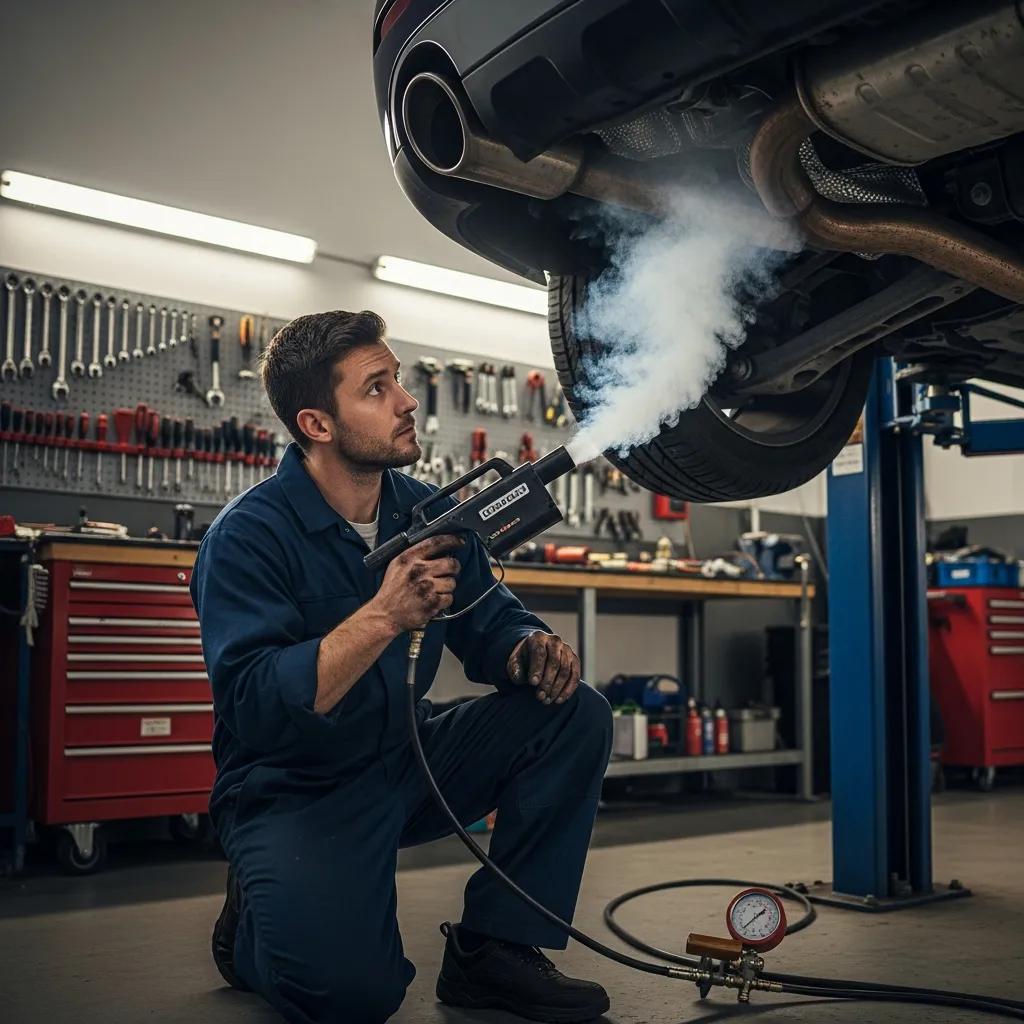
Using Diagnostic Tools: Employing tools like a smoke machine can help identify leaks by introducing smoke into the exhaust system, making leaks visible.
By utilizing these methods, you can effectively pinpoint exhaust leaks and address them before they escalate into more significant issues.
What Does Muffler Noise Indicate About Exhaust Issues?
Muffler noise can provide valuable insights into the condition of your exhaust system. Different types of noises can indicate specific problems:
Rattling Sounds: This may suggest loose components or internal damage within the muffler.
Loud Exhaust Noise: An excessively loud exhaust can indicate a failing muffler or exhaust leak, which may require immediate attention.
Hissing or Popping: These sounds often point to exhaust leaks, particularly at connection points or joints.
Understanding these noise indicators can help you determine when to seek professional evaluation to prevent further damage to your vehicle.
How Can You Diagnose Specific Exhaust System Problems?
Diagnosing specific exhaust system problems requires a systematic approach. Here are steps to effectively identify issues:
Step-by-Step Diagnostic Process: Begin with a visual inspection of the exhaust system, checking for any visible damage or leaks.
Tools Required for Diagnosis: Utilize diagnostic tools such as OBD-II scanners to check for error codes related to the exhaust system, which can provide insights into potential issues.
Common Problems Identified: Look for signs of rust, corrosion, or physical damage to components like the catalytic converter, muffler, and exhaust pipes.
By following these steps, you can accurately diagnose exhaust system problems and take appropriate action.
Advanced diagnostic techniques, including computational fluid dynamics (CFD) and finite element analysis (FEA), are often employed to analyze and optimize exhaust manifold designs, identifying root causes like insufficient natural frequency that contribute to fracture failures.
Exhaust Manifold Crack Diagnosis with CFD-FEA
ABSTRACT: For fracture cracks that occurred in the tight coupling exhaust manifold durability test of a four-cylinder gasoline engine with EGR channel, causes and solutions for fracture failure were found with the help of CFD and FEA numerical simulations. Wall temperature and heat transfer coefficient of the exhaust manifold inside wall were first accurately obtained through the thermal-fluid coupling analysis, then thermal modal and thermoplastic analysis were acquired by using the finite element method, on account of the bolt pretightening force and the contact relationship between flange face and cylinder head. Results showed that the first-order natural frequency did not meet the design requirements, which was the main reason of fatigue fracture. However, when the first-order natural frequency was rising, the delta equivalent plastic strain was increasing quickly as well. Ultimately, to solve the problem, the semi-shell was strengthened and some dents of critical areas were added so as to a
Cracking failure analysis and optimization on exhaust manifold of engine with CFD-FEA coupling, 2014
What Diagnostic Methods Detect Catalytic Converter Failures?
Detecting catalytic converter failures is essential for maintaining vehicle performance and emissions compliance. Here are effective diagnostic methods:
Symptoms of Catalytic Converter Failure: Common signs include a decrease in engine performance, poor fuel economy, and the illumination of the check engine light.
Diagnostic Tools Used: Mechanics often use OBD-II scanners to retrieve diagnostic trouble codes (DTCs) that indicate catalytic converter issues.
Importance of Timely Diagnosis: Addressing catalytic converter failures promptly can prevent further damage to the engine and exhaust system, saving you from costly repairs.
Regular diagnostics can help ensure your vehicle remains compliant with emissions standards and operates efficiently.
How to Inspect the Exhaust Manifold for Damage or Leaks
Inspecting the exhaust manifold is crucial for identifying potential leaks or damage. Here are effective inspection techniques:
Visual Inspection Tips: Look for cracks, rust, or signs of heat damage on the manifold. Pay attention to the gasket area, as leaks often occur here.
Signs of Damage: If you notice any discoloration or warping, it may indicate overheating or failure.
When to Seek Professional Help: If you suspect damage or cannot identify the issue, it is advisable to consult a professional mechanic for a thorough inspection.
Regular inspections can help maintain the integrity of your exhaust system and prevent costly repairs.
Further research into exhaust manifold failures reveals that issues like stress concentration from improper design or material defects such as porosity can lead to cracking, emphasizing the need for thorough inspection and quality manufacturing.
The diesel engine failed during a 700-h bench test due to the cracking of exhaust manifolds. To investigate the cause of exhaust manifold cracks, material chemical composition, hardness determination, metallographic examination as well as fracture observation were carried out. Besides, the corresponding stress states were calculated using the finite element method. The results show that the material chemical composition, metallurgical morphology and hardness of the exhaust manifolds A and B are in good accordance with the standard. The cracked failure of Part A is due to stress concentration caused by improper structural design. Increasing the fillet radius is a useful way to improve the quality of the exhaust manifold. When the fillet is R6, the stress concentration phenomenon is well resolved. For Part B, the crack is mainly caused by a porosity defects close to the crack initiation area, which has a diameter of 185 µm.
Failure analysis of a diesel engine exhaust manifold, W Huang, 2023
What Are the Typical Repair Costs for Exhaust System Issues?
Understanding the costs associated with exhaust system repairs can help you budget effectively. Here’s a breakdown of typical repair costs:
Service
Cost
Description
Exhaust Leak Repair
$150 – $300
Sealing or replacing damaged sections of the exhaust system.
Muffler Replacement
$100 – $300
Replacing a faulty muffler to restore proper function.
Catalytic Converter Replacement
$500 – $2,500
Replacing a failed catalytic converter, depending on the vehicle make and model.
These costs can vary based on the extent of the damage and the specific vehicle model. It’s essential to consult with a trusted mechanic for an accurate estimate.
How Much Does It Cost to Repair an Exhaust Leak?
Repairing an exhaust leak can vary in cost depending on the severity of the issue. Here are some factors affecting pricing:
Average Repair Costs: Typically, exhaust leak repairs range from $150 to $300, depending on the location and extent of the leak.
Factors Affecting Pricing: The type of vehicle, labor costs, and whether additional components need replacement can influence the final price.
Importance of Early Detection: Addressing exhaust leaks promptly can prevent further damage and higher repair costs down the line.
Regular maintenance and inspections can help catch leaks early, saving you money in the long run.
What Factors Influence Catalytic Converter Replacement Prices?
Several factors can influence the cost of catalytic converter replacement. Understanding these can help you prepare for potential expenses:
Material Costs: The price of the catalytic converter itself can vary based on the materials used, such as platinum, palladium, and rhodium.
Labor Costs: Labor rates can differ significantly based on the mechanic’s experience and the complexity of the replacement.
Market Demand: Fluctuations in the market for catalytic converters can also impact pricing, especially for specific vehicle models.
Being aware of these factors can help you make informed decisions regarding repairs and replacements.
How to Maintain Your Exhaust System to Prevent Problems?
Regular maintenance is key to preventing exhaust system problems. Here are essential maintenance tips:
Regular Inspection Schedules: Schedule routine inspections to check for leaks, rust, and other potential issues.
Signs of Potential Problems: Be vigilant for unusual noises, decreased performance, or changes in fuel efficiency.
Professional Servicing Recommendations: Consider having your exhaust system serviced by professionals like Route 40 Auto, who can provide comprehensive maintenance and repairs.
By following these maintenance tips, you can extend the life of your exhaust system and avoid costly repairs.
What Routine Checks Help Avoid Exhaust System Failures?
Implementing routine checks can significantly reduce the risk of exhaust system failures. Here are key checks to perform:
Inspection Frequency: Conduct visual inspections at least once a year or during regular vehicle maintenance.
Common Checks to Perform: Look for signs of rust, leaks, and damage to components like the muffler and catalytic converter.
Importance of Preventive Maintenance: Regular checks can help identify issues early, preventing more significant problems and ensuring your vehicle runs smoothly.
Establishing a routine maintenance schedule can help keep your exhaust system in optimal condition.
How Does Regular Maintenance Extend Exhaust Component Life?
Regular maintenance plays a crucial role in extending the life of exhaust components. Here’s how:
Benefits of Regular Maintenance: Routine checks and servicing can prevent rust and corrosion, which are common causes of exhaust system failures.
Common Maintenance Practices: Regularly replacing worn-out parts, such as gaskets and hangers, can help maintain system integrity.
Long-Term Cost Savings: Investing in regular maintenance can save you money by avoiding costly repairs and replacements in the future.
By prioritizing maintenance, you can ensure your exhaust system remains functional and efficient.
Why Choose Local Experts for Exhaust System Diagnostics and Repair?
Choosing local experts for exhaust system diagnostics and repair offers several advantages:
Local Expertise: Local mechanics often have a better understanding of common issues specific to your area and vehicle types.
Community Trust: Supporting local businesses fosters community relationships and trust in service quality.
Cost Savings: Local services may offer competitive pricing compared to larger chains, providing value without compromising quality.
Route 40 Auto is a trusted local provider in Bridgeport, OH, specializing in exhaust system diagnostics and repairs.
What Are the Benefits of Choosing Route 40 Auto in Bridgeport OH?
Choosing Route 40 Auto for your exhaust system needs comes with numerous benefits:
Expertise in Exhaust Systems: Our team has extensive experience diagnosing and repairing exhaust issues, ensuring your vehicle is in good hands.
Comprehensive Services: We offer a wide range of services, from routine maintenance to complex repairs, tailored to your vehicle’s needs.
Customer-Centric Approach: At Route 40 Auto, we prioritize customer satisfaction, providing transparent pricing and clear communication throughout the repair process.
By selecting Route 40 Auto, you can trust that your vehicle will receive the best care possible.
How Does Transparent Pricing Build Trust in Exhaust Repairs?
Transparent pricing is essential for building trust in exhaust repairs. Here’s why it matters:
Building Customer Trust: Clear pricing helps customers understand the costs involved, reducing anxiety about unexpected expenses.
Clear Communication: Providing detailed estimates and explanations fosters open communication between the mechanic and the customer.
Impact on Repeat Business: Customers are more likely to return for future services when they feel confident in the pricing and quality of work.
At Route 40 Auto, we believe in transparent pricing to ensure our customers feel informed and valued throughout their service experience.
Understanding Exhaust System Components and Their Functions
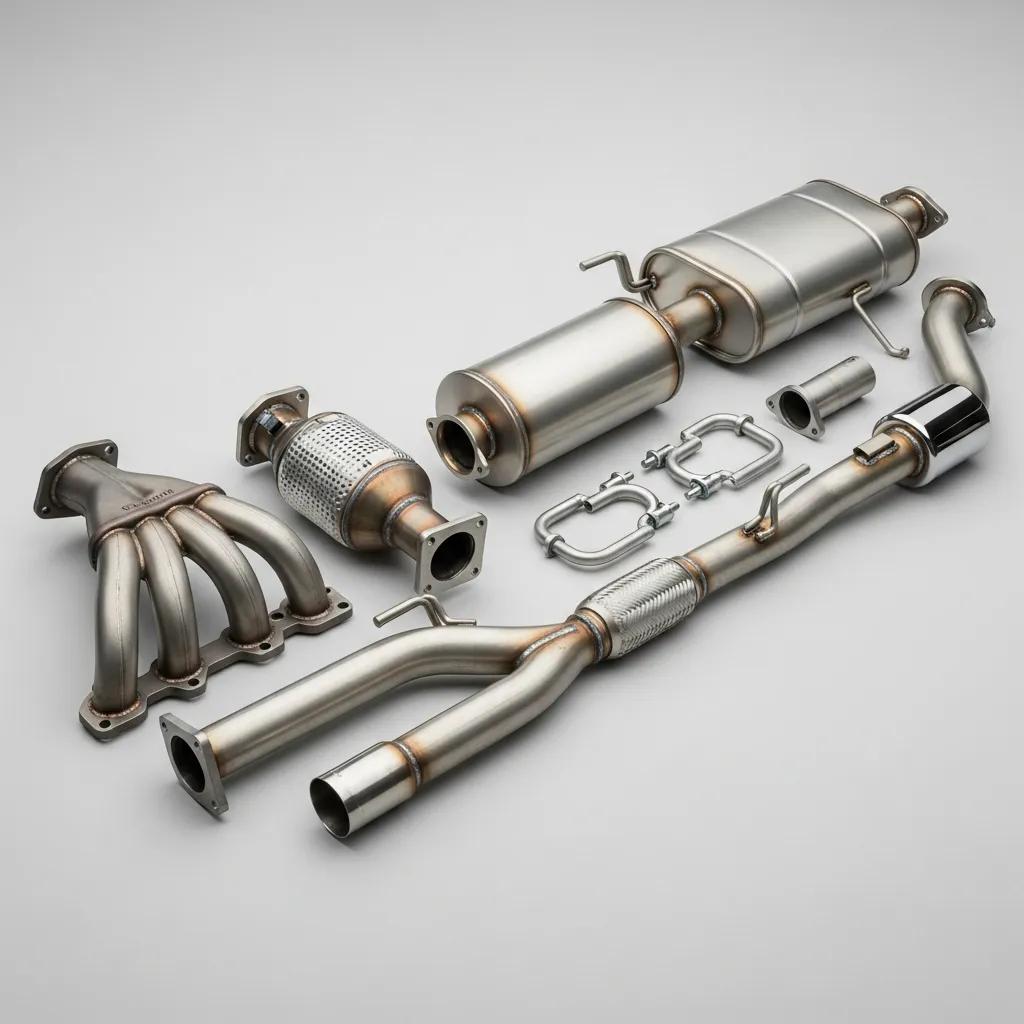
The exhaust system is a critical component of your vehicle, designed to direct harmful gases away from the engine and reduce emissions. Key parts include the exhaust manifold, catalytic converter, muffler, and exhaust pipes, each playing a vital role in ensuring optimal engine performance and compliance with environmental standards.
For instance, the exhaust manifold collects exhaust gases from the engine cylinders and directs them to the catalytic converter, where harmful pollutants are converted into less harmful emissions. Regular maintenance of these components is essential, as neglect can lead to performance issues and increased emissions, making it crucial for vehicle owners to understand their functions.
Signs of Exhaust System Wear and Tear
As vehicles age, their exhaust systems can experience wear and tear, leading to various issues. Common signs of deterioration include rust, corrosion, and unusual noises, which can indicate that components like the muffler or exhaust pipes need attention.
For example, if you notice a significant increase in noise levels when accelerating, it may suggest a failing muffler or an exhaust leak. Additionally, visual inspections revealing rust spots or holes can help catch problems early, allowing for timely repairs and preventing more extensive damage.
Environmental Impact of Exhaust System Failures
Exhaust system failures not only affect vehicle performance but also have significant environmental implications. A malfunctioning exhaust system can lead to increased emissions of harmful pollutants, contributing to air quality degradation and environmental damage.
Research indicates that vehicles with compromised exhaust systems can emit higher levels of carbon monoxide, nitrogen oxides, and hydrocarbons. Addressing these issues promptly is crucial not only for vehicle health but also for reducing the overall environmental footprint of your vehicle.
Choosing the Right Exhaust System Repair Service
Selecting a reliable repair service for your exhaust system is essential to ensure quality work and peace of mind. Factors to consider include the shop's reputation, customer reviews, and the availability of specialized services tailored to your vehicle's needs.
For instance, Route 40 Auto in Bridgeport, OH, is known for its expertise in exhaust system diagnostics and repairs. By choosing a local expert, you benefit from personalized service and the assurance that your vehicle is being handled by professionals who understand the specific requirements of your make and model.